
Why Southeast Michigan Homeowners Choose Culligan For Well Water Treatment
Our systems are second to none. The real advantage is that we make treating well water simple.
-
We Treat Your Water, Not A Category
Around here the question that matters is whether your well stops in the glacial drift or carries on into the bedrock underneath it. The two give up different water. USGS work across southeast Michigan found the highest arsenic results almost always came from bedrock wells, most of them in the Marshall Sandstone, while the shallower drift wells ran lower. Iron and manganese follow their own pattern, and hardness follows another. Your well log tells us the depth and the formation. The water tells us the rest. We start with a test and build the treatment around your numbers, which is why we won’t quote a system over the phone.
-
Michigan Checks Your Well Twice. Then Never Again.
Michigan is stricter than most states here, and that cuts both ways. Washtenaw County requires a new or replacement well, and any well at the time the home is sold, to test negative for coliform bacteria, under 10 mg/L for nitrate and under 10 ppb for arsenic. Livingston County requires the same three. So your water was almost certainly checked when the well went in, and again when you bought the house. And then nothing. No agency retests it, no reminder arrives, and nothing covers iron, manganese, hardness, sulfur or PFAS at all. The state advises a coliform test every year. After that first pass, it is entirely on you.
-
Expert Installation, And We Maintain It
Culligan has been in water treatment for more than 85 years and it’s all we do. Your local Culligan delivers, installs, and maintains the system for you, so there’s no shipping damage, no unboxing, no guessing about install location, and no third-party service line when it needs attention. Schedule an appointment, then enjoy the water.
-
Make Your Water Work For You
On the fence about whether you need treatment? These are the returns that pay a system off over time.
- Over $437 a year saved on soaps, shampoos and detergents in soft water
- Over $115 a year in gas water heater energy savings
- Up to 50% more life out of dishwashers and washing machines
- No more replacing fixtures and appliances that iron ruined early
Local Resources
Southeast Michigan Well Water
Why Does My Well Water Stain
Everything Orange Or Black?
Iron gives you the orange, manganese gives you the black, and around here they are common enough to be the rule rather than the exception. When USGS sampled 38 wells in Oakland County, most of them private wells serving a single home, 26 of them came in above the 0.3 mg/L limit for iron, and 12 were above the 0.05 mg/L limit for manganese. Statewide the picture is similar, with USGS finding iron over the limit in 44 percent of Michigan groundwater results and manganese in 30 percent. EGLE’s own advice is worth following before you buy anything: test total iron, manganese, hardness, alkalinity and pH together, because which treatment works depends on all five, not on the iron number alone.
Should I Be Testing My Well
For Arsenic?
Yes, and the honest version of this story is more useful than the scary one. Southeast Michigan does have naturally occurring arsenic, and USGS studied nine counties here with the state and county health departments. But the high end of that belt sits north and east of us, in Genesee and Lapeer. Washtenaw County posted the lowest median of all nine counties at 2.9 ppb. Of the 86 Washtenaw well analyses USGS compiled, about 78 percent were at or below today’s 10 ppb limit, which still leaves roughly one in five above it, and the county’s worst result was 75.9 ppb from a Marshall Sandstone well in Lyndon Township. Those records were gathered from existing files rather than a random survey, so treat them as a picture of the county, not a prediction about your well. Note too that a softener will not remove arsenic. EGLE is explicit that softeners and carbon filters do not work on it, and points to reverse osmosis or arsenic-specific media instead.
How Hard Is Well Water
In Southeast Michigan?
Harder than the city water, and here that comparison holds up. Detroit’s treated supply, drawn from the Detroit River and delivered through the Great Lakes Water Authority plants, reported total hardness averaging about 114 to 116 mg/L in recent testing, roughly 7 grains per gallon. Michigan groundwater runs higher. USGS sampling put the statewide median at 178 mg/L, about 10 grains per gallon, and stated that groundwater in the southeastern part of the state tends to carry more hardness and dissolved solids than the rest of Michigan. Nobody publishes a number for wells in this corner of the state specifically, so we won’t quote you one, but the direction is clear and your own result is a half-hour visit away. Test for it.
TREATMENT OPTIONS
Three Problems, Three Fixes For Your
Southeast Michigan Well
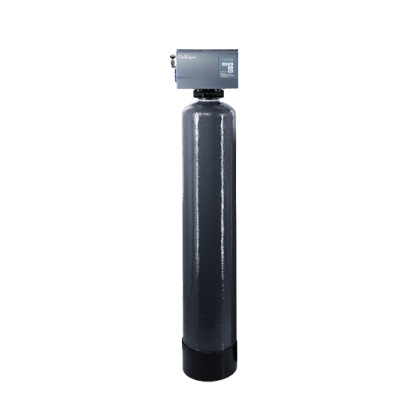
Iron & Sulfur Filtration
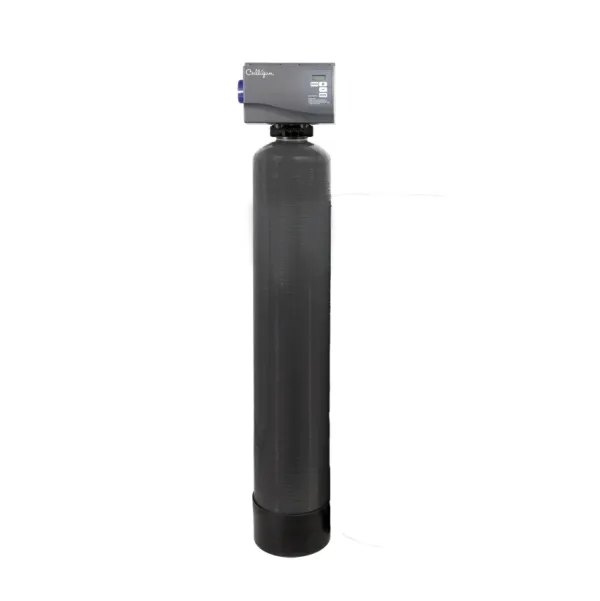
Water Softening
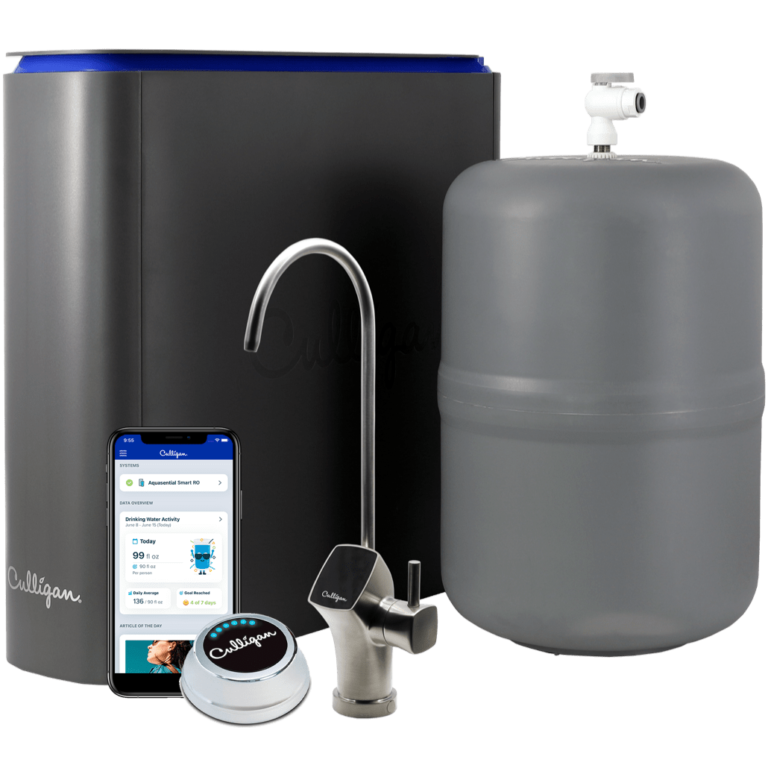
Drinking Water Systems
The Proof
Why Do Southeast Michigan Homeowners TRUST Our Well Water Treatment Systems?
Cleaner, drinkable and scent/rust free with your system installed (we have well water).

After being told by numerous other companies that I would have to replace my whole filter system, plus a new pressure tank, for thousands of dollars, Karen came in like a breathe of fresh air, showed me how to pressure my tank back up, turned back on the filters that had been left off by the previous inspectors, and arranged for a repair of the softener.
Based on our experiences and consultations with other companies who provide whole home water filtration systems, we subsequently have and will continue to recommend ONLY Culligan Water for whole home water filtration needs!
Rust Stains? Sulfur Smell? Scale?
Find Out What's Really
In Your Michigan Well Water!
• Fast on-site results, no mailing
• We test iron, manganese, hardness, alkalinity and pH
• Flexible sample pickup options

Frequently Asked Well Water Treatment Questions
We Have Answers
Will a water softener remove the iron from my well water?
A softener removes hardness and can carry a limited amount of iron and manganese along with it. Given how often iron runs high on wells around here, a dedicated iron filter is often the right answer instead. A test tells us which situation you're in, and EGLE recommends testing iron, manganese, hardness, alkalinity and pH together before anyone sells you equipment.
Will a softener take care of arsenic?
No, and this is worth being clear about. EGLE states plainly that water softeners and activated carbon filters are not effective for arsenic. What works is reverse osmosis at the tap or a dedicated arsenic adsorption medium, certified for the job. If a test comes back with arsenic, that changes the recommendation, which is exactly why we test first.
Do I need a softener, a filter, or both?
Most well homes in southeast Michigan end up with both, because hardness and iron are separate problems with separate solutions. Whole home filtration paired with softening is the usual answer for a typical well here.
Will my water taste salty?
No. A properly functioning water softener will never make your water taste salty. The small amount of sodium added is far too little to create a salty taste.
How does a water softener work?
Through ion exchange. As it removes the calcium and magnesium that make water hard, it replaces those ions one for one with sodium. The amount added is proportional to how hard your water is, and in most cases it isn't a significant contributor to the sodium in your diet.
Will a softener reverse damage already done to my appliances?
Yes. Once a softener is installed it begins removing the scale that hard water built up. It takes a long time to clear, but it will clear.
Are chemicals added to my water to soften it?
Other than salt or potassium chloride, no. A softener reduces the cleaning supplies and detergents going down your drain, which makes it a net positive environmentally.
How often do I need to add salt?
Modern softeners recharge based on how much water you use and how hard it is. Most of our customers add salt once or twice a year.
I keep seeing black specks. What is that?
Manganese, and it is common here. USGS found manganese above the 0.05 mg/L limit in 12 of 38 wells sampled in Oakland County, and in about 30 percent of Michigan groundwater results statewide. EGLE recommends keeping drinking water below 0.05 mg/L, and notes that for short-term exposure water at or below 0.3 mg/L showed no adverse effects for infants under six months. It stains fixtures and laundry black and it is removed with the same kinds of filtration used for iron.
My water was tested when we bought the house. Isn't that enough?
It was a good start and it covered three things. Washtenaw and Livingston Counties both require a well to test negative for coliform bacteria, under 10 mg/L nitrate and under 10 ppb arsenic, for a new or replacement well and at the time a home is sold. That test says nothing about iron, manganese, hardness, sulfur or PFAS, and nothing about how your water looks today rather than on the day of the sale. Michigan advises a coliform test every year after that, and nobody sends a reminder.
Why does my water smell like rotten eggs, and is it dangerous?
Hydrogen sulfide gas. It is a nuisance at the levels we usually see, but it deserves more respect than most water problems. EGLE has documented elevated hydrogen sulfide in groundwater in Monroe County, including an incident where a basement measured 132 parts per million. The part worth knowing: at higher concentrations the rotten-egg smell disappears, because it deadens your sense of smell, so odor is not a reliable warning. EGLE recommends taking steps to reduce exposure at 1.3 mg/L in water. Sulfur filtration removes it, and which method works depends on your iron and manganese levels.
What about PFAS? Michigan has strict rules now.
Michigan does have some of the strictest PFAS drinking water limits in the country, set in 2020, with PFOA at 8 parts per trillion and PFOS at 16. The catch for well owners is that those limits apply to public water supplies. EGLE states directly that private residential wells are not regulated under the Safe Drinking Water Act. The state samples residential wells near known or suspected PFAS sources, inside designated investigation areas, and covers the cost there. Outside one of those areas, PFAS testing is on the homeowner, through a laboratory certified for EPA Method 537.1.
Was the Huron River PFAS problem a well water problem?
No, and it is often described that way by mistake. That contamination traced to a manufacturer discharging to the Wixom sewer system, which reached the Huron River through Norton Creek. It became a surface water issue, a fish consumption advisory, and a municipal treatment issue for Ann Arbor, which added carbon filtration and now reports PFAS non-detect. When EGLE sampled 12 residential wells near Norton Creek in 2019, all of them came back non-detect. If you are near a known PFAS site your well is worth testing, but that particular event was not a private well story.
Is my well water safe to drink without treatment?
Iron, manganese, sulfur and hardness are aesthetic and nuisance problems at the levels we usually find. Safety questions like bacteria, nitrate and arsenic are separate tests and worth repeating on any private well, whatever the result was the year you moved in. Start with a water test and we'll tell you honestly which category your results fall into.
How long does installation take?
Most residential systems install in a few hours in a single visit. We deliver the equipment, install it, and set it up, so there's nothing for you to unbox or assemble.
We're building a house. When should treatment be designed in?
As soon as the well is drilled and tested. Roughing in space and plumbing for treatment during construction costs far less than retrofitting it into a finished home.
Where should I get started?
Every recommendation we make starts with knowing what is in your water. The test is free, it happens at your house, and it takes about half an hour. You'll get your numbers explained in plain language and an honest answer about whether you need treatment at all.

Facebook